How to Price T-Shirts: Profit, Margin, and Base Price
You can typically make between $5-$15 profit selling t-shirts online. **Make money selling print-on-demand **products. To be successful selling t-shirts, you need to have a personal pricing strategy.
How your price your t-shirts is dependent on your base price, profit margin, and retail price.
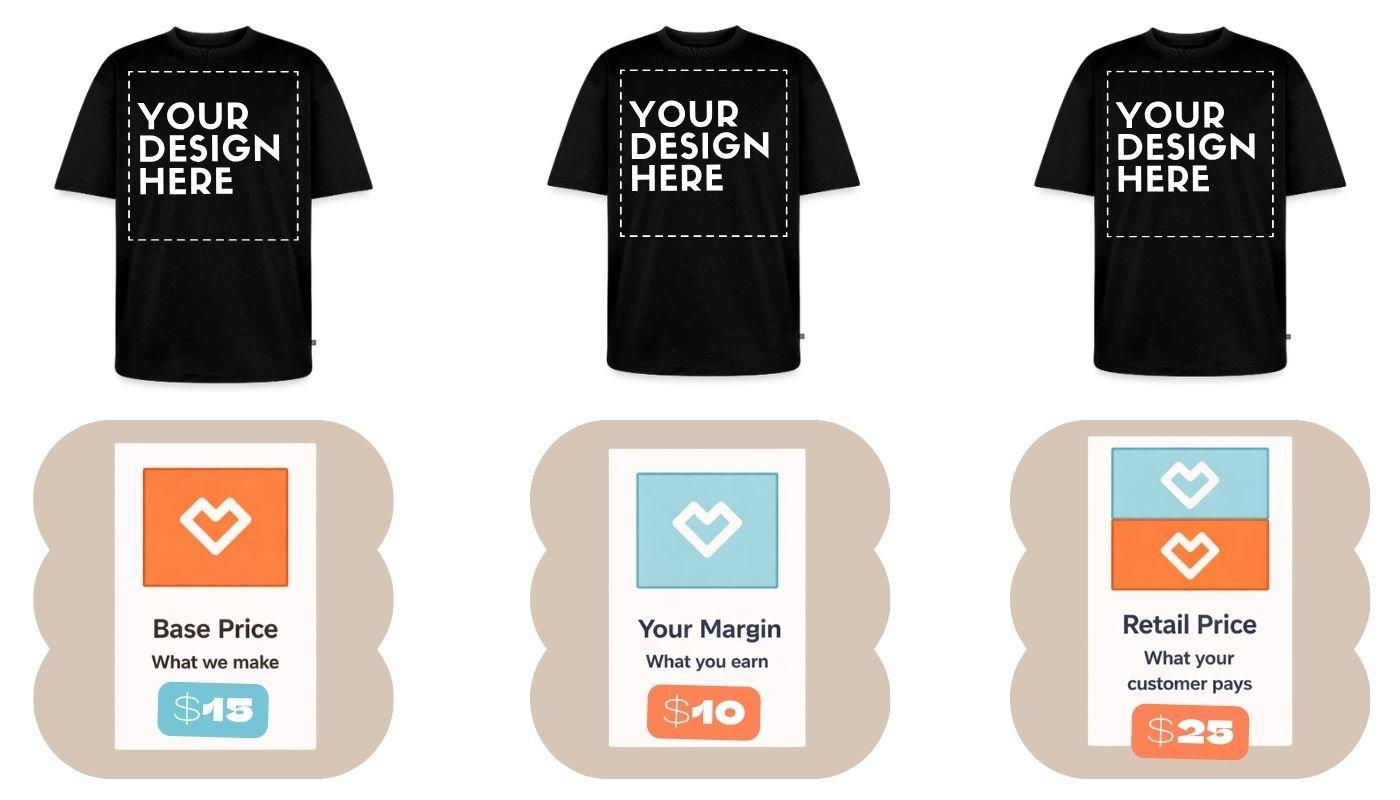
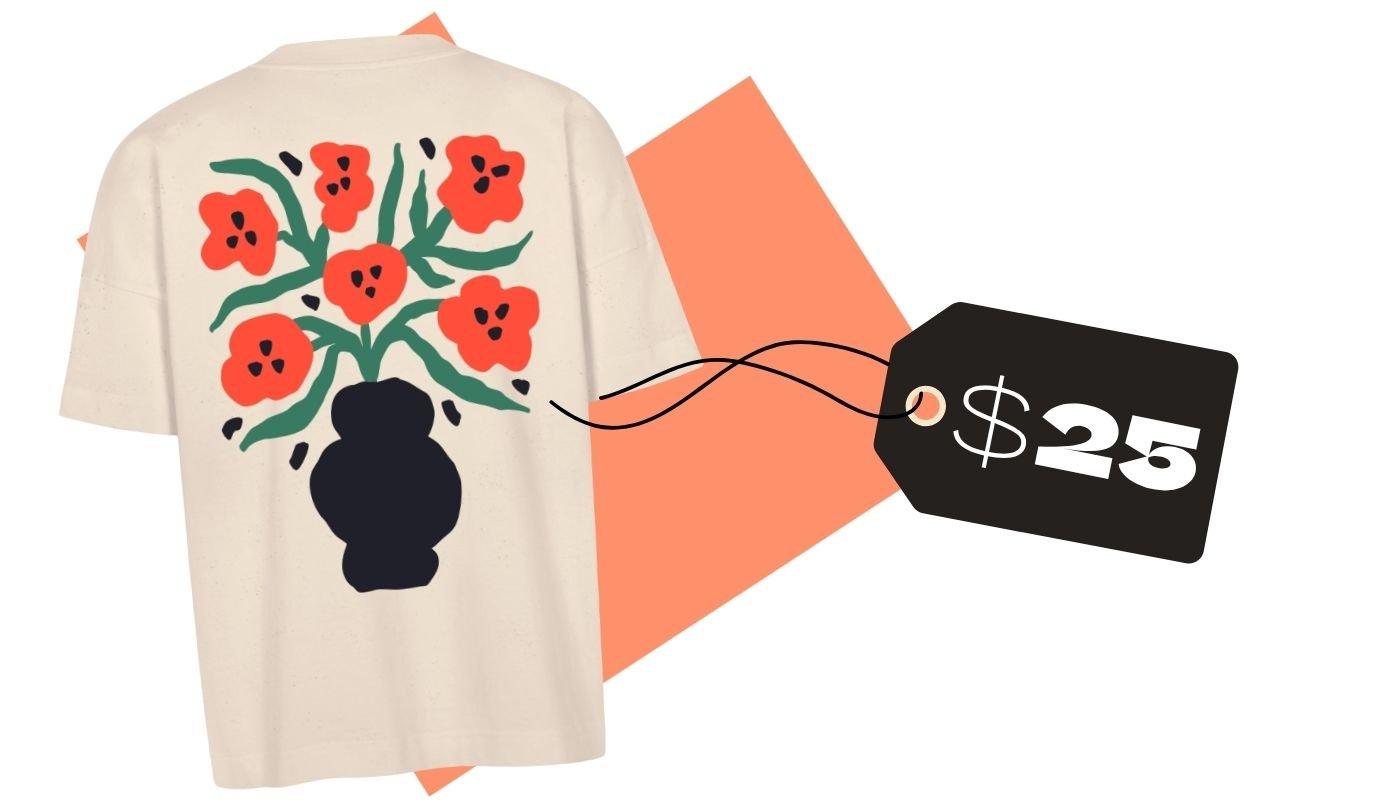
For example, if a t-shirt costs $15 to print and produce and you sell it for $25, you earn $10.
How it works:
Base Price: $15
Retail Price: $25
Your Profit: $10
We’ll show you how to set margins for t-shirts, how to price to earn more money, and proven tips for success pricing t-shirts.
T-Shirt Pricing Strategy: Setting Your Retail Price
The print-on-demand platform you use, like Spreadshop, has a fixed base price for each product. This typically covers product cost and fulfillment. Small printing fees may apply based on design complexity.
As a print-on-demand seller, you decide how much you add on top of a product’s base price.
That difference is your margin and what you earn.
For example:
Higher price: Larger profit margin per sale
Lower price: Potential for more sales volume
The key is finding a balance that works for your audience. $25-$30 is standard t-shirt pricing these days.
However, there is room for higher pricing based on product type: organic, premium, heavier fabrics. But that should not be the only type of t-shirt you sell in your shop.
You should offer a range of t-shirt options that different shoppers can afford.
How to Price T-Shirts (Quick Steps)
1. Start with the Spreadshop base price
Each product you sell with Spreadshop, like t-shirts, has a base price. This accounts for the item's base cost and fulfillment.
2. Set your profit margin
Your profit per t-shirt = Retail price − Base price (−discounts, if any)
3. Check your niche’s “normal” retail price range
Do some research on your e-commerce niche to see how print-on-sellers in that market typically price their t-shirts.
4. Decide on charm pricing ($24.99 vs $25).
Charm pricing is setting prices below a round number. It can make products appear cheaper and encourage more purchases of a product.
3. Check promo/discount impact before launching
Check how discounts will impact your current pricing strategy and make adjustments as needed.
What Pricing Looks Like at Scale
A single t-shirt sale might not sound like much, but it can add up quickly. Especially with the right strategy.
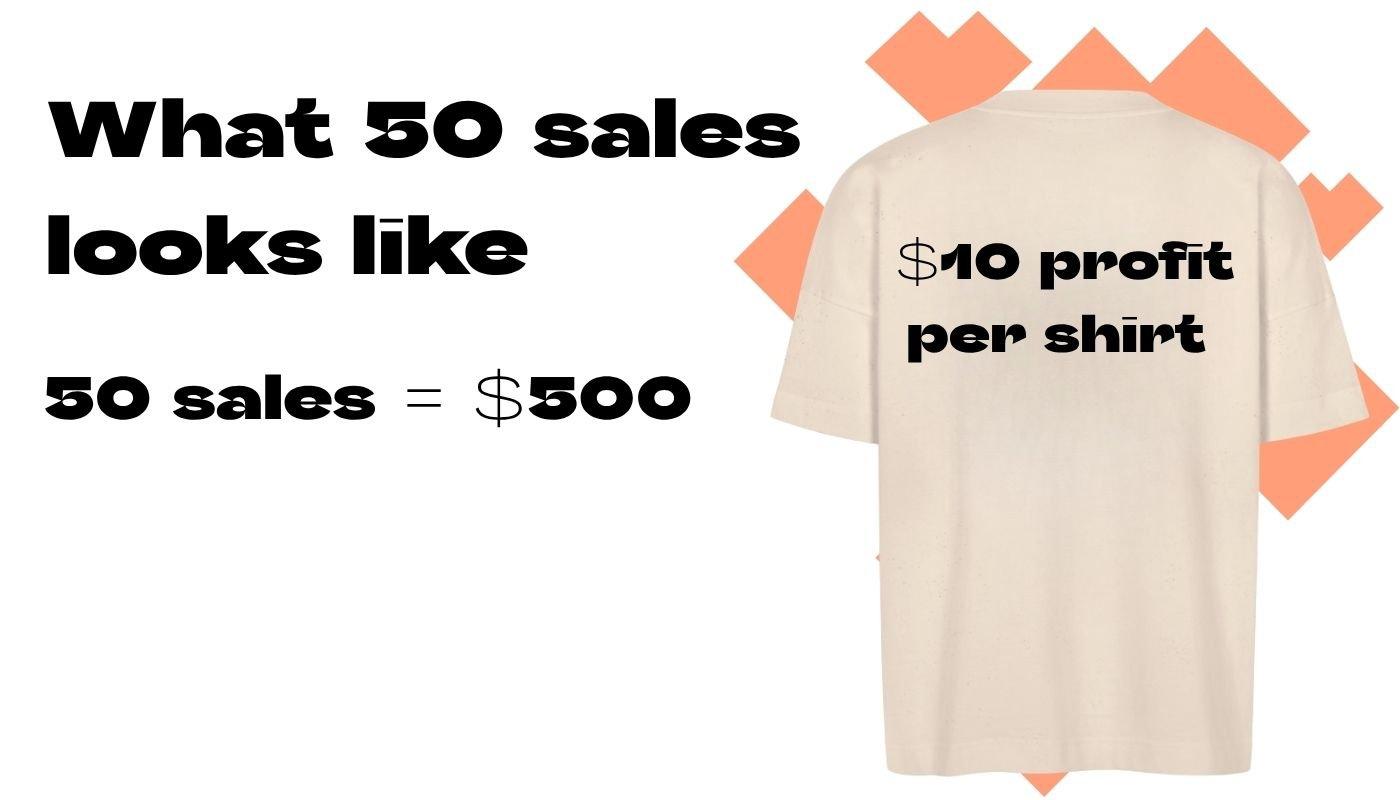
Based on profit of $10 per t-shirt:
10 t-shirt sales = $100
50 t-shirt sales = $500
100 t-shirt sales = $1,000
This is why many print-on-demand sellers focus on putting together exciting, and timely product drops.
What Can Impact Your Earnings
Not all print-on-demand sellers see the same kind of success. Your t-shirt earnings depend on a few key factors:
1. Your Niche
Specific audiences convert better than general ones. Every successful print-on-demand seller has one thing in common: their own niche.
A design made for a dedicated community (like dog lovers, avid hikers, or gym rats) is more likely to sell. And it makes creating relevant t-shirt designs and promoting that much easier.
2. Your Pricing Strategy
Pricing too low can limit your earnings, but pricing too high may reduce conversions in your shop. Testing and adjusting over time is key.
You need to be receptive to audience feedback to help grow sales in the long run.
3. Product Selection
T-shirts are a great starting point, and a best-selling product for print-on-demand sellers. Considering other product options once you have a quality design is also important.
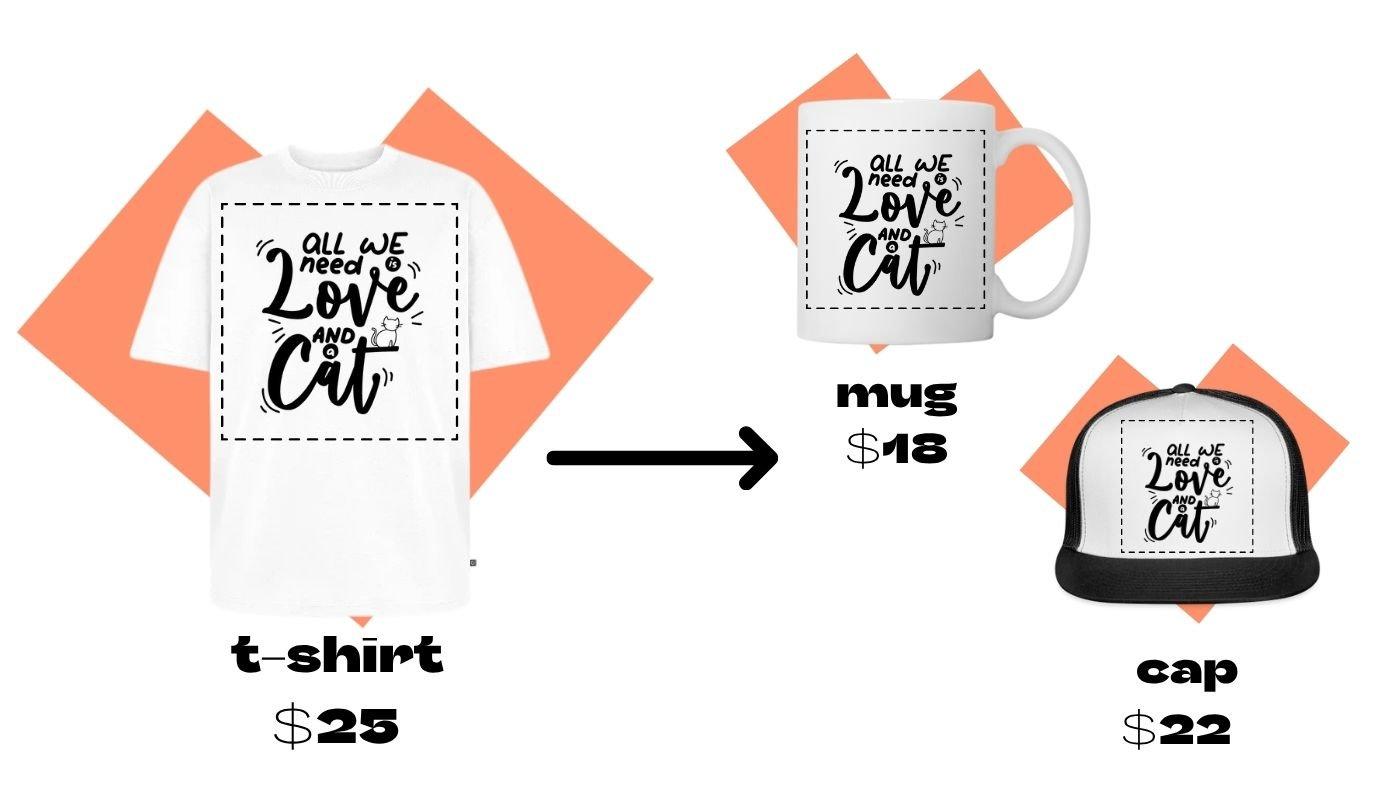
Our drag-and-drop design tool makes it easy to add existing designs to hoodies, mugs, caps, and more. Having more items in your shop helps increase the average order value per customer. Encourage bundle purchases by promoting products like t-shirts, stickers, and tote bags together.
4. Pricing Decisions
Running promotions and discounts on your t-shirts is an effective way to drive more sales. But it can affect your margins.
Before running a promotional campaign, recalculate the new profit per t-shirt and profit margin.
For example, a 15% discount would reduce your margin by 15% for each item sold during the promo period. Spreadshop also waives 15% of the base price.
How much you make selling print-on-demand t-shirts is up to you. You control your margins, what products you sell, and your promotional campaigns.
Knowing the base price and common margin of t-shirts and how it effects your profit is important. But it’s more important to know your audience by making and pricing t-shirts that appeal to them.
Start making your own t-shirts with Spreadshop. No upfront costs, no inventory, and you earn from every sale.
FAQs About Pricing T-Shirts and Selling Online
What is the average profit per t- shirt with print-on-demand?
Most print-on-demand sellers make about $5–$15 profit per t-shirt. This depends on the product’s base price (product cost), final retail price, and any discounts you choose to offer.
What is a good profit margin for print-on-demand t-shirts?
A common target is 30%–50% profit margin per t-shirt. Higher margins are possible with premium t-shirt options, but pricing products too high can decrease purchases.
What retail price should I set for t-shirts?
For standard t-shirts, the most common price range is $25–$30. Premium, organic, or heavyweight t-shirts often sell for $30–$40+ if your niche is interested in those options.
How do I price t-shirts on Spreadshop?
Use a simple pricing strategy:
Start with the base price
Add your target profit margin
Check competitor pricing in your niche
Should I price t-shirts low to get more sales volume?
Lower pricing can lead to more sales, but it also lowers your margin opportunity. Many sellers test a mid-range retail price first (e.g., $24.99–$29.99) and adjust based on their traffic and earnings.
Do promotions and discounts hurt print-on-demand profits?
Yes, discounts can reduce your profit per t-shirt. Always calculate your new profit before running promotions.
Spreadshop runs exclusive promotions every month that sellers can take advantage of to boost sales.
Toggle them on/off in your Spreadshop dashboard.